January strips a room of color. The tree comes down, the fairy lights go in a box, and the wall that looked warm in December looks bare by the second week.
Winter light does not fix it. Days are short, afternoons turn blue early, and most rooms get a few usable hours of daylight at most.
A canvas built for that light works differently from a summer piece. It has to hold up under a lamp rather than under a window.
Why Winter Walls Need Light
Dark months push people indoors, and indoor rooms get judged by how they feel at six in the evening rather than at noon.
Pale walls and bare surfaces read cold under artificial light. One canvas with a strong light source painted into it changes how the whole wall feels.
Choose scenes that contain their own brightness. A sunrise, a moon, or a snowfield can give the eye a bright point, and that point does the work a window cannot.
Sunrise in a Cold Palette

Sunrise Over a Snowy Landscape puts the brightest part of the picture low on the canvas, where winter light actually falls.
That low placement is the point. Warm light near the bottom of a frame lifts a room, while warm light at the top reads as a summer sky and leaves the wall below it cold.
Paint the sky first and the snow last. The pale ground picks up whatever is already on the brush, and a dirty brush turns snow gray.
Moonlight and Deep Blue

Blues dominate a winter palette, and blue is the hardest color family to keep consistent. Two blocks that look identical on the chart can read as different colors once they are side by side.
Magical Moon concentrates the blues in one area, which makes the variation look intentional instead of accidental.
Work one blue block, then its neighbor, then the next. Painting all the blues in one session keeps the pot open and the tone consistent. Beginners can start with the beginner collection and work up.
Small Pieces for Short Evenings
Winter evenings are short, and energy is lower. A large canvas that needs twenty hours can sit untouched for weeks and start to feel like a chore.
Small canvases suit the season. A piece from the abstract collection can be finished in two evenings, which gives you a result before motivation drops.
Several small pieces also cover a wall faster than one large one, and a mixed selection from the scenery collection keeps the color family consistent. Three finished minis hung in a row read as a deliberate arrangement.
Working in Low Light
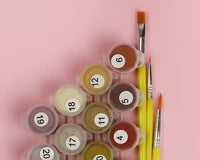
Painting under a ceiling light flattens the numbered lines. A desk lamp aimed across the canvas from the side throws a small shadow into each line and makes the numbers readable.
Angle the lamp from the left if you are right-handed. Your own hand then casts its shadow away from the area you are working on.
Daylight bulbs beat warm bulbs for this task. Warm light hides the difference between adjacent numbers, which is exactly the distinction you need to see.
A magnifier helps on detailed designs. Small numbered blocks sit close together on an advanced canvas, and misreading them means painting a block the wrong color.
Work with the canvas in the same position each session. Your eye adjusts to one setup, and shifting the canvas between evenings means rereading the chart each time.
Take a break every half hour. Winter evenings are dark, and your eyes tire faster under a single lamp than under daylight.
Worth the Extra Sessions
Winter designs take longer than summer ones for a simple reason. Pale colors need two coats to cover a numbered line, and cold rooms slow the drying between them.
Plan for the extra time rather than fighting it. Two coats on every pale block is normal, not a sign that something is wrong. The time guide breaks a canvas down by size.
Acrylic paint also thickens in a cold room. If the paint drags, stand the pot in a bowl of warm water for a minute rather than adding water to the pot. Seal the surface at the end with a varnish coat.
Colors That Warm a Room
Winter palettes lean cool, and a room painted in cool colors can still feel cold after a canvas goes up. The fix is one warm note in the composition.
Look for designs that include a lit window, a lamp, or a warm interior against a cold exterior. That single warm area does more for the room than any amount of pale blue.
Sunrise designs are built that way, with the warmth sitting low and the cold sky above it.
If you are choosing between two designs, take the one with the brighter focal point rather than the one with the wider view.
Pacing a Long Winter Project
The advanced collection holds designs that take well over twenty hours. That length suits January better than any other month, since nothing else is competing for the evening.
Break the canvas into named sections and finish one per week. Progress you can see beats progress you can only measure in hours.
Photograph the canvas when each section is finished. A fresh image shows the work progressing, and it makes a long project easier to return to after a week away.
Stop while a block is still easy. Fatigue shows in the small shapes first, and a rushed row of detail blocks takes longer to correct than it took to paint.
Frequently Asked Questions
Which winter canvas suits a first project?
A 30 × 40 cm design with large blocks is the better start. Detailed snow scenes reward experience more than they reward enthusiasm.
Can a winter canvas stay up after February?
Yes. Snow and moonlight read as landscapes rather than as holiday decor, so nothing forces a swap in spring.
Do pale colors need two coats?
Usually. Whites, creams, and pale blues are the most transparent pigments in a kit and cover a numbered line slowly.
Is painting good for low mood in winter?
Many people find the focus helpful. The benefits article covers the reported effects in more detail.
Can I paint outdoors in winter?
Not comfortably. Acrylic paint skins over in cold air, and the canvas surface stays tacky, so keep the work indoors.
Painting Until the Light Returns
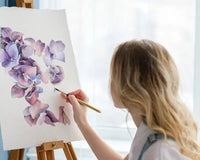
Winter asks for something to do with the evenings. A canvas fills them with a task that has a visible end and no deadline attached.
Start with one small piece and let it finish before buying the next. The wall fills slowly, and the room gets brighter a canvas at a time until the days lengthen on their own.