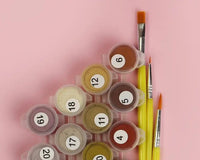
Every paint by numbers painter makes mistakes. A brush slips across the line. A color goes into the wrong numbered cell.
Halfway through a section, you realize the paint in the pot looks nothing like the reference image. None of these errors ruin the canvas. Most are fixable in under five minutes with the right technique.
Wet Paint Mistakes
Errors caught while the paint is still wet are the easiest to correct. Speed matters. Acrylic paint begins to set within minutes, especially in thin layers and dry environments.
Paint Applied to the Wrong Cell
If you place paint in the wrong numbered section and notice immediately, wipe it away with a damp cotton swab or the corner of a clean paper towel.
Work from the inside of the cell outward to avoid pushing wet pigment into adjacent areas. Rinse the swab and repeat until the canvas shows through. Let the spot dry for ten minutes before applying the correct color.
For larger wet mistakes covering multiple cells, use a damp flat brush to lift the paint, wiping the brush on a paper towel between passes.
Do not scrub. Scrubbing pushes the paint deeper into the canvas weave and spreads it sideways across the printed lines.
Color Bleeding Across Lines
If one color has bled into a neighboring cell, dip a fine liner or detail brush in clean water, blot most of the moisture away on a paper towel so the brush is damp but not wet, and trace along the edge of the spill.
The water reactivates a thin strip of acrylic, which you can then dab away with a dry swab. The goal is to restore the boundary line without disturbing the correctly painted area.
This technique works because acrylic paint forms a film on the surface of the canvas rather than soaking deeply into the fibers. The boundary line printed underneath remains visible once the surface layer is lifted.
Wrong Color on a Large Section
When an entire section has been painted with the wrong shade but the error is caught while the paint is still wet, the fastest fix is to lift as much pigment as possible, then let the residue dry and paint over it.
Use a damp, lint free cloth pressed gently onto the surface. Lift straight up. Do not swipe. Each press removes a layer of wet paint. After three or four presses, the cell will show mostly canvas with a faint tint. Allow it to dry completely.
Once dry, apply the correct color in two thin coats. The first coat neutralizes the underlying tint. The second coat provides full, even coverage.

Dry Paint Mistakes
Errors discovered after the paint has dried require a different approach. Acrylic film adheres firmly to the primed canvas and mechanical removal risks tearing the surface. Covering the error with fresh paint is almost always the better strategy.
Dark Color Over Light
Covering a dark dried color with a lighter shade is the most common dry paint challenge. Light paint over navy blue or black will look gray and muddy unless you first create a neutral base.
Apply a thin layer of titanium white or a neutral gray across the entire cell. Let it dry thoroughly. This intermediate coat acts as a primer, blocking the dark pigment underneath. Once the white coat is dry, apply the correct light color.
One coat is usually sufficient because the white base provides a clean, bright surface.
If the correct color is itself a dark shade, skip the white primer and apply it directly in two coats. Dark pigments have enough opacity to cover most dried colors without help.
Light Color Over Dark Without White
If you do not have white paint available, apply the correct color in multiple thin coats, allowing each coat to dry before applying the next. Three or four thin layers build enough opacity to obscure most underlying colors.
This is slower than the white primer method but works with any paint. Avoid the temptation to apply one thick coat. Thick acrylic cracks as it dries and the surface texture will draw attention to the corrected area.
Restoring a Printed Line
After covering a mistake with fresh paint, the printed boundary line that separates the corrected cell from its neighbors may no longer be visible.
Painters who want sharp definition can redraw the line using a fine tip permanent marker in a dark gray tone. Black ink reads as harsh and artificial against the softer acrylic palette.
A dark gray marker, applied with a light hand directly over the buried line, restores the boundary without calling attention to the correction.
Let the corrected paint cure overnight before drawing over it. Fresh acrylic clogs the marker tip.

Paint Pot Problems
Not all mistakes happen on the canvas. Some start in the pot.
Dried Out Paint
Acrylic paint in small pots dries out if the lid is not sealed airtight between sessions. Revive thickened paint by adding two or three drops of clean water, stirring thoroughly with a toothpick, and letting it sit for five minutes.
Repeat if necessary. If the paint has hardened into a solid lump, it cannot be revived. Contact the kit seller for a replacement pot or purchase a matching acrylic tube from an art supply store.
Matching the exact shade requires comparing the dried paint on the canvas to a color swatch rather than relying on the lid label alone.
Paint Too Thin or Watery
Paint that arrives thin and translucent may have separated during storage. Stir the pot thoroughly with a toothpick, scraping the bottom and sides to remix settled pigment.
If it remains watery, leave the lid off for twenty to thirty minutes to let excess water evaporate. Check consistency every ten minutes. Once the paint reaches a creamy, spreadable texture, close the lid.
Wrong Color in the Pot
Occasionally a kit contains a pot labeled with one number but filled with a different color. Before panicking, paint a small test swatch on the edge of the canvas or a piece of scrap paper and let it dry.
Wet acrylic looks darker than dry acrylic. What appears wrong in the pot may dry to the correct shade. If the dry swatch still does not match the reference, contact the seller with a photograph of the swatch and the pot label.
Quality suppliers replace mislabeled pots at no charge. While waiting, skip that color and work on other sections. Returning to a project after a break is easier than correcting a section painted in the wrong shade.
Preventing Mistakes in Advance
- Work in natural daylight or under a daylight spectrum lamp. Warm indoor bulbs shift colors toward yellow and orange, making navy look like black and violet look like brown.
- Clean the brush thoroughly between colors. A brush carrying traces of dark blue will contaminate a pot of pale yellow. Rinse, blot, and inspect the bristles before dipping into a new color.
- Number the paint pot lids with a permanent marker in large, legible digits. Small printed labels are difficult to read under anything but direct light.
- Work one color at a time within each section. Switching between multiple colors in one session increases the chance of picking up the wrong pot.
Conclusion
Mistakes are not failures. They are the point at which a painter stops following the numbers and starts learning the craft.
A corrected section is indistinguishable from one painted correctly the first time. What remains is the skill to fix the next error, and the one after that.

The right canvas minimizes common mistakes from the start. A paint by numbers kit matched to your experience gives you a design you can finish with confidence.