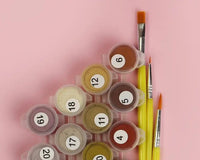
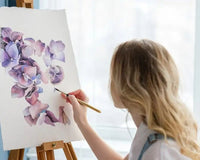
A pet portrait painted by hand is one of the few gifts that cannot be bought ready-made, and a paint by numbers kit made from your own photo makes the process far more achievable than most people expect. You choose the photograph, the kit arrives with the outlines printed and the paint already matched, and what is left is the part that matters: the hours spent painting an animal you know well. For anyone who has never painted before, the printed outlines remove the two things that usually stop people: drawing the subject and mixing the colors.
Why Pet Photographs Work So Well
Pets make unusually good subjects for paint by numbers because their faces carry strong, readable features. The shape of an eye, the line of a muzzle, and the fall of an ear are all distinct enough to survive being divided into numbered sections, which is not true of every subject. Fur also gives the painting a natural texture to work with, since adjacent shades blend visually at a normal viewing distance even when the sections are clearly separated on the canvas.

The result is a portrait that reads as recognizably your animal rather than as a generic pet picture, which is the main reason these kits outsell most other custom subjects. Where a landscape photograph can be reproduced by anyone with a printer, a painting of your own dog is not something that can be substituted. That specificity is what makes the custom route worth the difference in price over a printed design.
What Makes a Good Pet Photograph
The photograph matters more than the kit settings, and this is exactly where most disappointing results originate. A clear and well-lit picture taken at eye level will convert beautifully even at just 24 colors. Conversely, a blurry phone snapshot taken from above in dim light will convert poorly regardless of how many colors you select. Taking a few minutes to find your absolute best picture is always better than just using whatever is closest at hand.

To ensure your custom kit converts perfectly, keep these five key elements in mind:
If you are choosing between photographs, pick the sharper one even if the pose is less appealing. Images with strong contrast between the animal and the background also convert much better because the outline of the head and body stays distinct on the canvas. A dark pet photographed against a dark background is the most common reason a custom kit comes out looking muddy. For the best possible outcome, photograph your animal near a window on an overcast day. This produces the even, shadowless light that converts most reliably.
Choosing the Right Size and Color Count
Color count and canvas size both affect how much detail survives the conversion, and for pet portraits they matter more than for most subjects because faces are unforgiving. The site's own guidance is that 24 colors suit photographs with little color variation, 36 colors suit portraits and landscapes, and 48 colors give the most detailed result available. In practice, color count determines how finely the image can be divided, while canvas size determines how large each of those divisions ends up being on the printed surface.
For a pet portrait, 36 colors is the sensible starting point, and 48 colors is worth the extra if the photograph is sharp and the animal has varied markings. The price step between the tiers is modest at the median, around ten dollars between 24 and 36 colors, so the decision should follow the photograph rather than the budget. Paying for 48 colors on a soft or blurry image does not produce a better painting, because there is not enough detail in the source to divide into smaller sections.
Size matters for a different reason. A custom kit at 30x40cm gives a portrait that works well on a desk or a shelf, while 50x60cm and above produce something intended for a wall. Larger canvases also carry more sections for the same image, which means finer detail in the face, and that is why serious portrait projects tend to be ordered large. If the painting is a memorial rather than a decoration, the extra detail on a larger canvas is usually worth paying for.
What a Custom Pet Portrait Costs
Custom kits are priced by size, color count, and whether you want framing, and the range is wide enough that it is worth knowing where your choice sits. The table below uses median prices from the current catalog. These are the typical prices rather than the only ones, because the cheapest and most expensive combinations within each size vary with the color count and the framing option chosen.

| Canvas size | Median price | What it suits |
|---|---|---|
| 30x40cm | $61.49 | A single animal, desk or shelf display |
| 40x50cm | $72.99 | A single animal with good detail, wall display |
| 50x60cm | $105.99 | Two animals, or one animal with a detailed background |
| 60x80cm | $150.99 | A statement portrait, most detail in the face |
The cheapest custom kit in the range starts at $32.99 for a 30x40cm canvas at 24 colors without framing, and the entry price for a United States-shipped version is $39.99. Framing adds between $22 and $59 depending on size, and a standalone wooden frame kit at $20.99 is the cheaper route for smaller canvases. Comparing the two routes is worthwhile, because the factory-framed option at 30x40cm costs $19 more than the DIY frame kit route. If the portrait is a gift, ordering it framed removes the last step before it can be hung, which matters when the recipient is not expecting a project.
Making the Portrait Meaningful
Because the kit is built from your photograph, the choices you make about the image determine what the finished painting means. A portrait of a pet who has died is a common and worthwhile use of a custom kit, and the finished canvas becomes a record rather than a decoration. The same is true of a photograph taken on a particular day or in a particular place, and those details are worth preserving even if a technically better photograph is available.
If the painting is intended as a gift, the decision about whether to pre-paint it or give the kit itself is worth some thought. Handing over a finished portrait is a completely different gesture from handing over a canvas with the outlines printed, and the latter works well when the person enjoys the process as much as the result. Both are valid, and the printed outlines mean the recipient cannot get the likeness wrong. Giving the unfinished kit alongside a photo of the animal it was made from is a detail that makes the gift land better.

Painting an Animal You Actually Know
The reason a custom pet portrait works is that the subject is specific. A printed design gives you a pleasant painting of a dog, while a custom kit made from your own photograph gives you a painting of your dog, with the ear that never sits straight and the expression you recognize. Choose the sharpest photograph you have, take 36 colors as the default and 48 if the picture is good enough to deserve it, and pick a size based on where the finished canvas is going to live. If it is a gift, having it arrive framed is the difference between giving someone a painting and giving them a project. Start from the custom kit range, and if you would rather paint a design first, the standard kits and the mini kits offer the same sizes and framing options for less. If you need help choosing a photo, contact us.