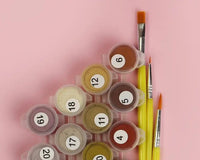
Acrylic paint dries by losing water, and a paint by numbers pot holds a small amount of paint in a shallow container with a limited seal. That combination means a pot left open, or a kit left untouched for several months, will thicken and eventually set hard. The good news is that water-based acrylic is far more forgiving than oil paint, and a large share of pots that look ruined can be brought back to a usable state.
Why Paint by Numbers Pots Dry Out
The paint pots in a kit are deliberately tiny, designed to hold just enough pigment for a single canvas. Because they contain so little water, the acrylic paint rapidly forms a skin once surface moisture evaporates. This hardens the top layer even while the paint underneath stays soft. It also explains why the issue strikes so suddenly: a pot that seemed perfect after your last session can become completely unusable just a week later.
Most dried-out paint problems boil down to three common culprits.
- Lids aren't snapped shut completely after a session, allowing continuous air exposure.
- The kit is stored in a warm environment, which accelerates evaporation.
- The kit is left unopened for months.
This is exactly why manufacturers strongly recommend starting your project soon after delivery to ensure the paints stay fresh.

| Situation | What happens | How quickly |
|---|---|---|
| Lid not fully seated | Air reaches the surface continuously | A skin forms within days |
| Stored somewhere warm | Evaporation accelerates even with the lid closed | Weeks rather than months |
| Kit left unopened for months | The little water in each pot slowly escapes | Months, varies by color |
| Pots barely used | Very little paint to hold moisture | Fastest of all, often the first to fail |
What to Do in the First Twenty-Four Hours
Paint that has only just begun to thicken is the easiest case, and this stage is worth catching early because the fix takes a minute. If the paint looks like it is forming a skin but the surface still yields when you press it with a brush handle, the pot is still recoverable with nothing more than water. Checking every pot at the start of a session rather than only the ones you plan to use is worth the extra minute, since paint left thickening for another week is much harder to bring back.
- Remove the skin carefully with the tip of a clean brush or a toothpick rather than stirring it back in, because a broken skin leaves lumps that show on the canvas.
- Add water one drop at a time, using a dropper or the tip of a wet brush, and stir gently with a brush handle.
- Stop as soon as the paint returns to a creamy consistency, because acrylic becomes thin and translucent quickly if you overshoot.
- Replace the lid firmly and press all the way around the rim to confirm the seal.
The key discipline here is adding water in single drops rather than pouring. A paint by numbers pot holds only a few milliliters, and it takes very little extra water to turn usable paint into a watery wash that will not cover the printed numbers underneath it. If you do overshoot, leaving the lid off for a few hours lets some of the water evaporate, which is a safer correction than trying to thicken the paint with anything else.

Reviving Paint That Has Fully Dried
Fully dried acrylic feels hard and does not yield at all when pressed. This is a different problem from thickened paint, and it needs more patience than a single drop of water, but it is often still recoverable because acrylic rehydrates rather than curing permanently like a two-part resin. Pots holding lighter colors benefit most from an attempt at revival, because whites, pale yellows, and light pinks are the shades most often needed in large areas.
- Add a small amount of water to the pot and leave it to stand rather than stirring immediately, because the water needs time to soak into the dried block.
- Cover the pot and wait at least an hour, checking periodically, since larger dried blocks may need longer.
- Work the softened paint with a brush handle or a small palette knife once the edges begin to loosen, then add water a drop at a time.
- If the paint has separated and is grainy rather than smooth, it has passed the point of recovery and should be set aside.
The one thing not to do is add hot water in the hope of speeding the process up. Heat affects how acrylic binds, and paint revived with hot water often looks correct in the pot but dries with a patchy finish that shows clearly against sections painted earlier. Room-temperature water and an hour of patience give a better result than heat and impatience.
Preventing the Problem in the First Place
Prevention is genuinely easier than revival, and the measures are simple enough to become a habit within one painting session. Press every lid down fully at the end of a session, including the pots you barely touched, because the ones with the least paint dry out fastest. A kit bought from the current range is packed for freshness, and that advantage is yours to keep or lose depending on how the pots are stored between sessions.

| Habit | Why it helps |
|---|---|
| Press lids down until they seat fully | A partly seated lid lets air reach the paint continuously |
| Work from one pot at a time and close it before opening the next | Reduces the number of pots exposed to air at any moment |
| Store the kit somewhere cool and out of direct sun | Heat accelerates evaporation even when the lids are closed |
| Start the project within a few weeks of delivery | The kit is packed for freshness and that advantage fades with time |
| Keep a small dropper bottle of water with the kit | Makes it easy to add a drop before paint thickens rather than after |
Working in short sessions makes the storage question more important rather than less. People who paint for twenty minutes in the evening and then close the kit properly never have a drying problem, while those who leave twenty pots open through a long session tend to find several of them unusable the following week. The habit that matters most is closing a pot before opening the next one, because it limits how many are exposed to air at once no matter how long the session runs.
When Replacement Is the Better Answer
Some pots cannot be saved, and it is worth recognizing the point at which effort stops being worthwhile. If the paint has become a hard block that does not soften after standing with water for several hours, or if it has separated into a grainy liquid with solid lumps that will not break down, reviving it will produce a finish that looks different from the rest of the painting. Setting that pot aside early is better than spending a session on it and then discovering the problem on the canvas.
In that situation, the practical options are to substitute the nearest color from a set you already own, to use a matching shade from a spare kit, or to contact the site. A standard kit already contains a full palette, and many of the tones repeat closely enough that a neighboring color works without being noticeable on the finished canvas. The kit ranges start at $27.99 for a complete mini kit, which is worth remembering when deciding whether a failed pot justifies waiting for a replacement or simply buying a small backup set of acrylics.

Frequently Asked Questions
Can you add water to dried acrylic paint?
Yes, acrylic paint is water-based and will rehydrate to a degree. Add a small amount of room-temperature water, leave it to soak rather than stirring immediately, and give it at least an hour. Add further water a drop at a time once the edges begin to soften, because acrylic thins very quickly once it starts to loosen. Grainy paint that will not smooth out has gone too far.
How long can paint by numbers paint sit before it dries out?
It depends on the seal and the storage conditions. A pot left open can form a skin within hours, while a properly sealed pot stored in a cool place usually survives for months. The most common cause of loss is a lid that was not pressed down fully rather than the age of the kit, which is why the seating of the lid matters more than the calendar.
Is it better to add water or acrylic medium to dried paint?
Water is enough for simple rehydration, and it is what most people already have. Acrylic medium is useful when you need to restore body and gloss as well as moisture, but for a paint by numbers kit, the pots are small and thin washes do not cover the printed numbers, so plain water used sparingly is the safer choice. If you keep a dropper bottle with your painting accessories, the habit becomes easier to maintain.
What should I do if only some of the pots have dried out?
Revive the ones that respond and substitute the rest. Paint by numbers kits repeat similar tones across a palette, so a shade that has failed often sits close to another pot in the same kit or to a color in a spare set. Only order a replacement when the dried color covers a large area rather than a detail accent, because a small accent can usually be mixed or matched without being noticeable.
Should I use hot water to speed up reviving dried paint?
No. Heat affects how acrylic binds even though it may appear to work in the pot, and paint revived with hot water often dries with a patchy finish that stands out against sections painted earlier. Room-temperature water with an hour of soaking gives a more reliable result. Patience costs nothing here, and the alternative is repainting a section you have already completed.
Getting the Most out of Every Pot
Treat a paint by numbers kit like a set of small containers rather than a single project, because every pot is an independent container with its own seal and its own exposure to air. Close each one fully after use, add a drop of water at the first sign of thickening rather than waiting for a skin to form, and store the kit somewhere cool.
If a pot does set hard, soak it in room-temperature water for an hour before giving up on it, since acrylic responds to water far more readily than most people expect. When a color really has failed, matching it from a neighboring pot is usually quicker than waiting for a replacement, and a spare mini kit at $27.99 is cheaper insurance than abandoning a canvas that is already half finished. If you're choosing a new project, explore the Purple Passion paint by numbers kit.