Halloween decorating runs on a short clock. A carved pumpkin sags, crepe paper tears at the tape line, and most of the effort goes in the trash when November arrives.
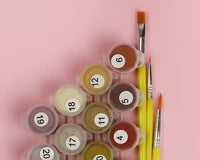
Paint by numbers runs on a longer one. You spend a few evenings filling numbered shapes, hang the finished canvas in October, and pull it out again next year without repainting a thing.
These ideas move from a pumpkin canvas to a full portrait wall.
A Pumpkin That Never Rots

Start with the pumpkin itself. An Evil Halloween Pumpkin is the simplest canvas to hang above a mantel or beside a porch door, and the orange blocks are wide enough that a beginner can fill them without wobbling at the edges.
For something darker, Black Pumpkin and Bats trades bright orange for charcoal and bone. It reads as decoration from across a room instead of as a craft project.
These compact canvases are small enough to hang between windows and large enough that the pumpkin shape is readable from the sofa.
Tall Trees for Corners

Tall shapes do work that small squares cannot. A Halloween Scary Tree gives a wall a vertical line, which is exactly what a corner lacks when everything else is furniture.
Hang it low on a narrow strip between a bookshelf and a doorway. The branches pull the eye upward, and the wall stops looking empty.
Pumpkin Tree does the same job in warmer tones. Hang them together, and you get height without building a full gallery arrangement.
Cats, Bats, and Black Paint
Black is the hardest color to lay down evenly, and Halloween kits use a lot of it. Too little paint on the brush leaves streaks. Too much floods the numbered lines and bleeds into the block next door.
Load the brush, drag it across the block, and reload. Do not go back over a block that is already wet.
Cat Pumpkin mixes a black cat into the pumpkin form, which gives you practice on a small area before you commit to a large one. Halloween and Bats spreads the black across a night sky, and a dark background hides small slips far better than a pale one.
Thin coats beat a heavy coat. An initial coat can look patchy and still dry evenly. When a block does dry streaky, the mistakes guide covers how to lift it without disturbing the blocks beside it.
The Spooky Portrait Wall

Costume portraits turn a hallway into a scene, and the pop culture collection carries the rest of that range. Joker's Game and Harley Quinn are painted as pictures rather than as faces, so they hang like art instead of like costume posters.
Place them side by side at eye level with a little breathing room between the frames. Match the frames if you can. Different frame colors split the attention and make the pair look accidental.
A portrait pair is enough for a hallway. Adding more can turn the wall into a merchandise display.
A Corner for Small Painters
Children want to paint whatever the adults are painting. Beginner designs use fewer colors and larger blocks, which keeps a session short enough for a young attention span.
Pull a design from the beginner collection and set a low table with a jar of water and a roll of paper towels. Numbered blocks remove the drawing decisions, so the work moves quickly and nobody stalls on what to paint next.
Acrylic stays workable in the pot and dries fast on the canvas. That combination suits a short kitchen table session before interest fades.
Light the Canvas From Below
A finished canvas looks flat under a ceiling fixture. Put a small LED puck light on the floor and aim it up the wall, and the painted shapes pick up shadow and depth.
Warm white works better than daylight white here. Cool light drags the orange toward pink.
Keep real candles away from the canvas, frame, and surrounding decorations. Use LED candles for a flame-free glow.
Keeping It Up All Year
Some canvases do not need to come down. A portrait or a black cat reads as art in November as easily as it does in October.
If you plan to leave a canvas hanging, order it framed rather than bare. A frame carries a picture through the rest of the year, and a raw stretched edge looks unfinished against a painted wall.
Canvas Size for the Wall
Sizes range from compact to large. The choice follows the wall, not the amount of free time you have.
Small Canvases for Tight Walls
A small canvas fits a gap between windows, the space above a desk, or a short hallway run. Most painters finish a compact piece across a few evenings.
Large Canvases Need Distance
A large canvas needs a wall you can stand back from. In a compact room, it crowds the furniture and forces you to view it from too close.
Measure Before You Order
Mark the wall with painter's tape at the size you are considering and leave it there for a while. The tape tells you more about proportion than any size chart.
Painting Order for a Dark Scene
Work from light to dark on a Halloween canvas. That order runs against how most painters start, and it is what keeps a night scene readable.
Pale areas go down first, while the water is still clean. Moonlight, bone, and window glow all need a bright base, and painting them last means dragging dark pigment back across a block that should stay light.
Dark areas also cover mistakes. A night sky painted over a streaky section hides the streaks, while a pale highlight painted over a dark smear never does.
Leave the blackest blocks for the very end. By then, the brush carries an even load and the paint sits where you put it instead of pooling at the edge.
Framing a Seasonal Canvas
A Halloween canvas gets handled seasonally: taken down, stored, and hung again. That handling is what damages a bare edge.
A frame protects the corners. Canvas wrapped around a stretcher bar takes a knock at the corner every time it goes up, and the paint film cracks along the fold after a few seasons.
Store the piece flat or leave it hanging rather than stacking it. Stacked canvases press against each other, and acrylic stays slightly soft for weeks after it feels dry to the touch.
Write the year on the back. A wall that grows season by season becomes a record of the household, and the dates are the part guests ask about.
Frequently Asked Questions
How long does a Halloween canvas take?
A small beginner canvas can be completed across several short sessions. A large advanced canvas needs more painting time.
Do I need to seal the paint?
Acrylic dries to a matte finish that holds up indoors. A thin coat of varnish helps if the canvas hangs near a door or in a bright window.
Can I reuse the canvas next year?
Yes. Dust it with a dry cloth and store it flat or leave it hanging. Acrylic does not yellow the way oil does.
Is a Halloween kit a good project for children?
Beginner designs are the better starting point, since the blocks are larger and the color count is lower.
Can I turn a photo into a Halloween canvas?
Yes. The custom collection turns a photo into a numbered canvas, which suits a porch shot or a family costume picture.
Picking the Wall Before the Kit
Choose the wall first. A corner wants a tall canvas, a narrow strip wants a small canvas, and a hallway wants a portrait at eye level.
Once the wall is settled, the kit choice becomes easy. Pumpkin, cat, tree, and portrait designs all come in the same size range and the same acrylic palette, so nothing forces a compromise.
The wall stays decorated after the candy bowl empties, and that is the part that lasts.
Have questions about choosing a kit? Contact us.